Fixture Installation in Los Angeles

faucets, toilets, disposals, shutoffs, old angle stops, and condo water control. This page explains what usually fails, how dense LA access changes the visit, what can increase cost, when the work becomes urgent, and how to prepare a clean dispatch window.

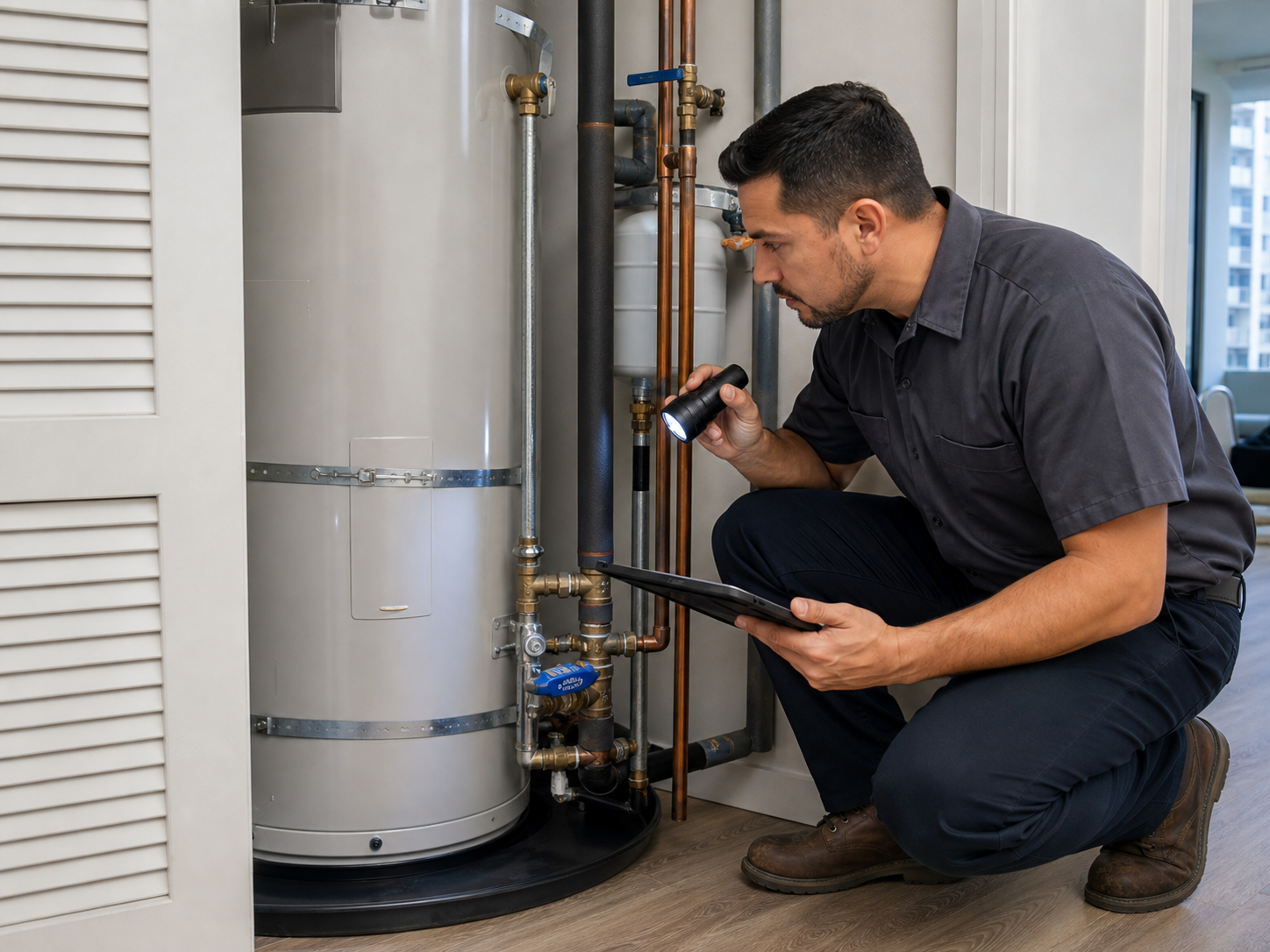
Plumber inspecting a water heater and shutoff valve in a compact Los Angeles condo utility closet

Quick answer

Fixture Installation should be scoped as a building-systems problem, not a loose line item. In a dense Los Angeles condo, apartment, townhome, or older home, the technician needs to understand the symptom, the equipment age, the access path, the utility or panel condition, and the risk to adjacent units before recommending repair or replacement. For fixture installation, the most common cost drivers are Fixture type, Old shutoffs, Drain alignment, Wall or tile access, Condo shutoff coordination. The most common risk signals are Failed angle stops, Hidden corrosion, Drain mismatch, Loose toilet flange, Water damage below unit.

For homeowners, the practical move is to prepare the site before the visit. That means opening the mechanical room, roof, garage, meter room, water heater closet, panel location, or cleanout access; checking whether the HOA requires advance notice; and collecting photos that show the equipment, shutoff, drain, breaker, or leak path. A service call that starts with access solved can spend the time on diagnosis instead of building logistics.

Best first step

Use the external booking link, describe the symptom in plain language, and add building details: market, unit type, parking, elevator, roof or garage access, shutoff location, panel location, and any property manager rules.

What can go wrong if it is handled like a generic repair

A generic repair mindset misses the constraints that cause return visits. If roof access is locked, the HVAC diagnosis may stop before the condenser is checked. If a panel is full, a new heat pump, water heater, or EV charger can become an electrical planning issue. If a water heater sits above another unit, a small leak can turn into documentation, moisture mapping, and neighbor communication. If a drain backup is actually a shared stack, clearing one fixture may only hide the larger problem for a few days.

Like-for-like fixture work is often simple; moving plumbing, adding fixtures, or remodel scope can require permits. That is why the page separates immediate diagnostic work from permanent repair, replacement, or installation. The goal is not to create paperwork for small work. The goal is to avoid failed inspection, unsafe equipment, wrong parts, inaccessible equipment, and damage to the building envelope or another unit.

How fixture installation changes by building type

Service quality depends on recognizing the building pattern before the technician arrives.

Building patternWhat changesWhat to prepare
High-rise condoFreight elevator timing, concierge access, fan-coil or riser constraints, strict water or electrical shutoff rules.Reserve elevator pads, notify management, confirm mechanical-room access, and prepare photos.
Older apartmentOld panels, shared drains, compact closets, previous repairs, and limited documentation can expand diagnostics.Locate the panel, cleanouts, water shutoffs, and any property manager contact.
Townhome or small-lot homeEquipment may be split between garage, roof, balcony, attic, or exterior side yard with HOA limits.Confirm exterior access, noise rules, equipment location, and parking or ladder staging.
Older single-family homeCrawl spaces, old piping, old wiring, duct leakage, and sewer roots can create cross-trade findings.Clear crawl or garage access, collect equipment age, and note any remodel history.

Los Angeles markets where this service is commonly requested

Open a market page or jump directly into a city-by-service page for a more specific version of this guidance.

South Park

high-rise condo district. Local risk examples: fan-coil access, electrical-room lockouts.

South Park service area

Arts District

loft and mixed-use district. Local risk examples: long duct runs, open-ceiling conduit.

Arts District service area

Little Tokyo

compact urban neighborhood. Local risk examples: small utility closets, aging fixtures.

Little Tokyo service area

Chinatown

older mixed-use district. Local risk examples: old drains, panel obsolescence.

Chinatown service area

Koreatown

dense multifamily district. Local risk examples: overloaded panels, shared drain stacks.

Koreatown service area

Westlake

older apartment district. Local risk examples: aging plumbing, ungrounded circuits.

Westlake service area

Pico-Union

older urban residential neighborhood. Local risk examples: galvanized piping, undersized panels.

Pico-Union service area

Echo Park

hillside-urban mix. Local risk examples: old sewer laterals, pressure issues.

Echo Park service area

Los Feliz

older homes and condo pockets. Local risk examples: aging sewer laterals, panel limitations.

Los Feliz service area

Need fixture installation? Start with the dispatch window.

The booking CTA always uses the external Nexfield form. Add photos, access notes, urgency, and building constraints so the visit starts prepared.

Homeowner Questions

Short answers for the questions that usually decide whether this is a repair, replacement, inspection, or emergency visit.

What is the first thing to check before booking fixture installation?

Start with access and safety: Buy compatible fixtures, Check shutoff valves, Clear under-sink access. Then add equipment photos, building rules, and urgency notes in the booking flow.

What drives the cost of fixture installation in Los Angeles?

Common cost drivers include Fixture type, Old shutoffs, Drain alignment, Wall or tile access, Condo shutoff coordination. Dense buildings can add garage, elevator, roof, HOA, shutoff, or permit friction.

Can fixture installation require a permit?

Like-for-like fixture work is often simple; moving plumbing, adding fixtures, or remodel scope can require permits.

Why does this service page mention other trades?

Urban LA building systems overlap. HVAC equipment can depend on electrical capacity, electrical work can be affected by leaks, and plumbing repairs can expose venting, access, or finish-protection concerns.

Service notes from urban LA homeowners

These visible review bodies are kept in exact parity with the JSON-LD review schema on this page.

Elena C. Miracle Mile

They prepared the building manager, elevator pads, parking window, and water shutoff timing before the water heater replacement. That saved us from a second disruption.

Thomas K. Pasadena

The heat pump discussion included comfort, electrical load, equipment matching, and permit timing. It felt like a real plan for the house, not a generic estimate.

Nadia M. Koreatown

The team treated our condo like a building project, not just an AC call. They checked roof access, panel capacity, condensate routing, and the HOA work window before touching the equipment.

Book Call