Historic Core HVAC, Electrical, and Plumbing

Historic Core service has to account for adaptive-reuse lofts, prewar apartments, mixed-use floors, compact studios and local friction such as old freight elevators, limited chase access, night work restrictions, building engineer coordination. This page connects the neighborhood context to HVAC, electrical, plumbing, emergency, cost, and inspection-ready service pages.

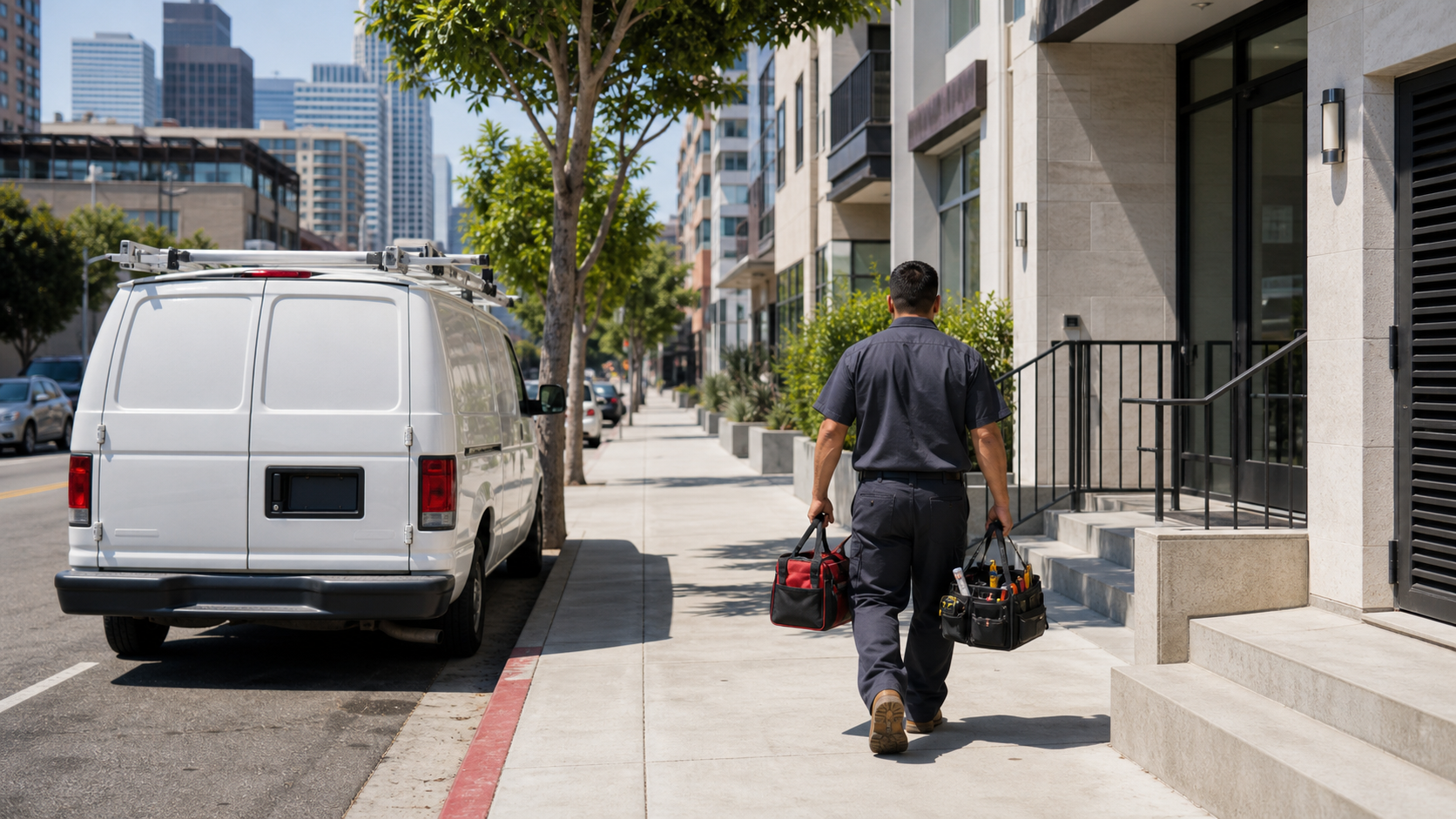
Service technician arriving at a dense Los Angeles urban residential building

Local building systems in Historic Core

Historic Core is best treated as a adaptive-reuse corridor service market, not a generic Los Angeles label. The homes and units around Broadway lofts, Spring Street buildings, older commercial conversions can include adaptive-reuse lofts, prewar apartments, mixed-use floors, compact studios. That variety matters because an HVAC, electrical, or plumbing call may involve a roof hatch, older panel, shared drain stack, water heater closet, crawl space, garage conduit path, or HOA rule before the core repair can begin.

The local utility and permit context also matters. LADWP electric and water service, with SoCalGas context where gas appliances remain. For permitting and inspection, the relevant context is LADBS plan check and inspection. A quick repair may stay straightforward, but equipment replacement, new circuits, repiping, sewer repair, water-heater replacement, heat pump installation, EV charger work, or remodel-related changes can trigger documentation and inspection steps. The safest way to plan is to identify the likely trade scope before opening walls, replacing equipment, or promising a same-day completion.

Access notes for Historic Core

Prepare for old freight elevators, limited chase access, night work restrictions, building engineer coordination. If a building manager, front desk, HOA, or neighbor below must be involved, solve that before the dispatch window so the visit does not turn into an access-only trip.

Common local failure modes

In Historic Core, the most common service friction includes obsolete panels, limited vent routes, old galvanized or cast-iron drains, heat gain through large windows, shared shutoff confusion. HVAC calls often become more than a thermostat issue when equipment is on a roof, airflow is restricted by old duct design, condensate cannot drain properly, or the electrical panel is too tight for a modern heat pump. Electrical calls often expand when old panels, ungrounded circuits, overloaded appliance loads, or shared meter rooms make a simple device repair less simple. Plumbing calls can become urgent when a water heater leaks above another unit, a stack backs up, a shutoff fails, or a sewer line is affected by roots or old pipe material.

Seasonal conditions add another layer: summer cooling load, wildfire-smoke filtration, holiday/event parking limits. During heat events, no-cooling calls can involve vulnerable occupants and overloaded temporary cooling. During poor air quality or wildfire smoke periods, filtration, duct leakage, and fresh-air paths matter. During rain or heavy usage periods, slow drains and sewer odors can move from annoyance to backup risk.

Historic Core service matrix

Choose the trade or jump into a high-intent city-by-service page.

Cost and emergency planning in Historic Core

The right service window depends on urgency, access, and whether a repair can remain a repair.

HVAC

Cooling calls become more expensive when roof access, condenser placement, line-set condition, condensate routing, or electrical disconnects are unresolved.

AC repair in Historic Core

Electrical

Panel and circuit work changes when load calculations, meter-room access, grounding, utility territory, or HOA approval are part of the job.

Panel upgrades in Historic Core

Plumbing

Leaks, drains, and water heaters are more urgent when water can reach lower units, shared stacks, electrical equipment, or old shutoffs.

Water heater service in Historic Core

Book HVAC, electrical, or plumbing service in Historic Core.

Use the dispatch window and include unit type, symptom, building access, shutoff or panel location, parking notes, and manager or HOA requirements.

Nearby service areas

Nearby links keep the local cluster connected and prevent orphan pages.

South Park

high-rise condo district. Common concern: fan-coil access.

Open South Park

Little Tokyo

compact urban neighborhood. Common concern: small utility closets.

Open Little Tokyo

Arts District

loft and mixed-use district. Common concern: long duct runs.

Open Arts District

Chinatown

older mixed-use district. Common concern: old drains.

Open Chinatown

Westlake

older apartment district. Common concern: aging plumbing.

Open Westlake

Helpful guides for Historic Core

These guides explain the decisions that often come before a repair or replacement.

Homeowner Questions

Short answers for the questions that usually decide whether this is a repair, replacement, inspection, or emergency visit.

What makes service in Historic Core different?

Historic Core has adaptive-reuse lofts, prewar apartments, mixed-use floors patterns, with access issues such as old freight elevators, limited chase access, night work restrictions. That changes dispatch planning before diagnosis starts.

Which utility and permit context applies in Historic Core?

LADWP electric and water service, with SoCalGas context where gas appliances remain. Permit context: LADBS plan check and inspection. Exact requirements depend on address, scope, and field conditions.

What emergencies are common in Historic Core?

Common risk signals include obsolete panels, limited vent routes, old galvanized or cast-iron drains, heat gain through large windows. Active leaks, burning electrical smells, no cooling during heat, or backed-up drains should be treated as urgent.

How do I prepare a visit?

Confirm parking, elevator or stair access, roof or garage access, shutoff and panel locations, building manager contact, and any HOA work-hour rules before the dispatch window.

Service notes from urban LA homeowners

These visible review bodies are kept in exact parity with the JSON-LD review schema on this page.

Nadia M. Koreatown

The team treated our condo like a building project, not just an AC call. They checked roof access, panel capacity, condensate routing, and the HOA work window before touching the equipment.

Derek L. Downtown LA

Our leak was moving toward the unit below us. LA Metro Home Systems helped isolate the shutoff, documented the moisture path, and explained what the plumber and electrician needed to check next.

Priya S. West Hollywood

The electrical visit was clear and practical. They did not guess on the EV charger. They looked at the panel, garage path, utility territory, permit steps, and the HOA charger rules.

Book Call