Quick answer
Furnace Repair should be scoped as a building-systems problem, not a loose line item. In a dense Los Angeles condo, apartment, townhome, or older home, the technician needs to understand the symptom, the equipment age, the access path, the utility or panel condition, and the risk to adjacent units before recommending repair or replacement. For furnace repair, the most common cost drivers are Ignition parts, Gas valve condition, Venting access, Closet clearance, Combustion air limitations. The most common risk signals are Cracked heat exchanger, Blocked vent, Improper closet combustion air, Failed inducer, Carbon monoxide hazard.
For homeowners, the practical move is to prepare the site before the visit. That means opening the mechanical room, roof, garage, meter room, water heater closet, panel location, or cleanout access; checking whether the HOA requires advance notice; and collecting photos that show the equipment, shutoff, drain, breaker, or leak path. A service call that starts with access solved can spend the time on diagnosis instead of building logistics.
Best first step
Use the external booking link, describe the symptom in plain language, and add building details: market, unit type, parking, elevator, roof or garage access, shutoff location, panel location, and any property manager rules.
What can go wrong if it is handled like a generic repair
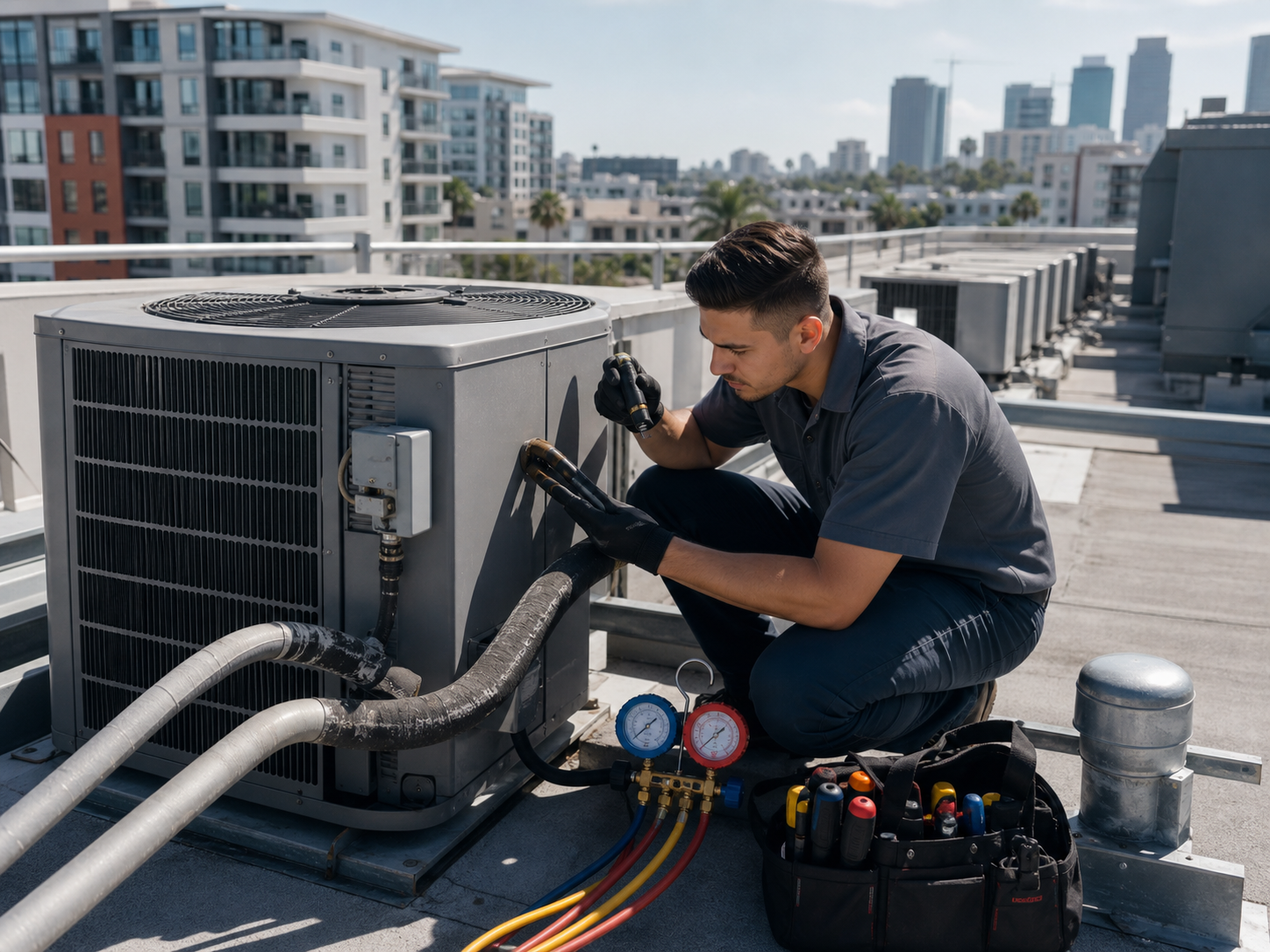
A generic repair mindset misses the constraints that cause return visits. If roof access is locked, the HVAC diagnosis may stop before the condenser is checked. If a panel is full, a new heat pump, water heater, or EV charger can become an electrical planning issue. If a water heater sits above another unit, a small leak can turn into documentation, moisture mapping, and neighbor communication. If a drain backup is actually a shared stack, clearing one fixture may only hide the larger problem for a few days.
Diagnostics usually do not require permits; replacement, venting changes, and fuel-line modifications can require proper permit review. That is why the page separates immediate diagnostic work from permanent repair, replacement, or installation. The goal is not to create paperwork for small work. The goal is to avoid failed inspection, unsafe equipment, wrong parts, inaccessible equipment, and damage to the building envelope or another unit.