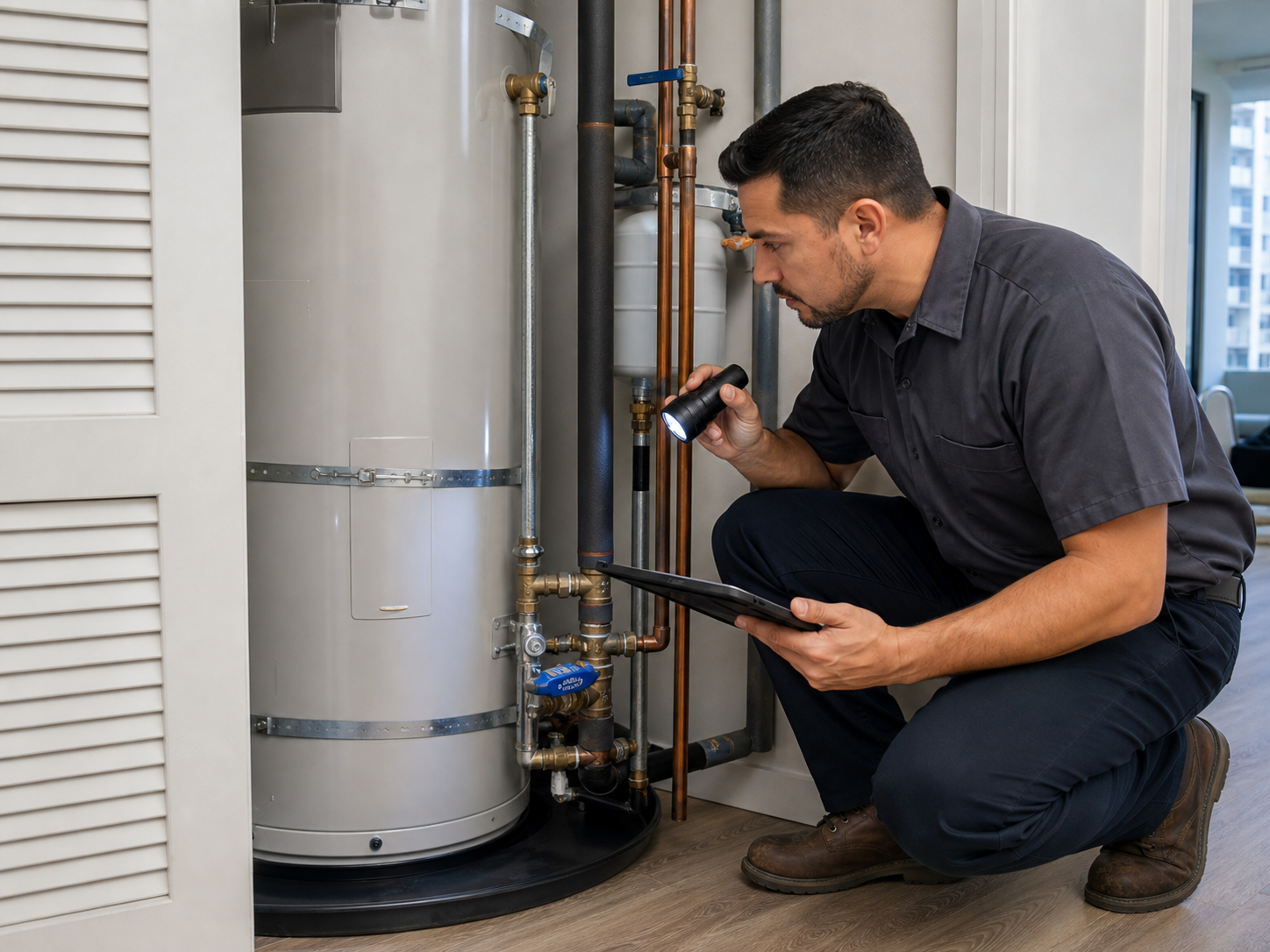
Quick answer for Historic Core homeowners
Emergency Plumbing in Historic Core should start with a clear symptom, a clean access plan, and a realistic view of what can expand the scope. The visible problem may be Lower-unit flooding, Mold growth, Electrical contact, but the visit can change when the building adds building engineer coordination, old freight elevators, or limited chase access. In a compact studios, the technician may need to reach the equipment, panel, drain, shutoff, cleanout, roof hatch, balcony, garage, or building manager before the real diagnostic work starts.
The most useful preparation is simple: book the dispatch window, add photos, list the exact symptom, note whether other units are affected, and confirm who controls the building areas. If the call involves no cooling, active leaking, burning smell, repeated breaker trips, water heater failure, or a backup that affects more than one fixture, treat it as urgent. If the symptom is stable, use the same process to plan a repair, replacement, or inspection-ready estimate without forcing an emergency premium.
Best first move
Book through the external form, then prepare these items: Close local shutoff if possible; Move belongings away from water; Photograph active leak; Notify neighbors below; Book immediate service access. For Historic Core, add access notes for old freight elevators; limited chase access; night work restrictions; building engineer coordination.
Why emergency plumbing repair is different in Historic Core
Historic Core sits in the Downtown and Central service cluster and is best understood as a adaptive-reuse corridor. Homes around Broadway lofts, Spring Street buildings, older commercial conversions can combine adaptive-reuse lofts, prewar apartments, mixed-use floors, compact studios on the same few blocks. That mix matters because the same emergency plumbing repair call can require different equipment, ladder access, shutoff windows, service-hour approvals, or cleanup protection depending on the building. A newer high-rise may have strict elevator and engineer rules. An older apartment may have limited panel labeling and shared drain stacks. A converted building may hide old pipes, old wiring, or nonstandard mechanical routing behind newer finishes.
The local utility context is also part of the plan: LADWP electric and water service, with SoCalGas context where gas appliances remain. The permit and inspection context is LADBS plan check and inspection. For emergency plumbing, the permit question is: Emergency stop-damage work can start quickly; permanent repair, water-heater replacement, sewer repair, or repiping may require permits. That does not mean every small diagnostic requires a major permit process. It means the repair should be separated from permanent replacement, new circuit work, gas or venting changes, sewer or pipe work, equipment relocation, or any scope that changes the building system.
Historic Core data-point snapshot
Reference points: Broadway lofts; Spring Street buildings; older commercial conversions. Building mix: adaptive-reuse lofts; prewar apartments; mixed-use floors; compact studios. Access profile: old freight elevators; limited chase access; night work restrictions; building engineer coordination. Risk profile: obsolete panels; limited vent routes; old galvanized or cast-iron drains; heat gain through large windows; shared shutoff confusion. Seasonal operating context: summer cooling load; wildfire-smoke filtration; holiday/event parking limits. Nearby comparison markets for routing and internal links: Downtown LA, South Park, Little Tokyo, Arts District, Chinatown.
A useful Historic Core dispatch note should sound different from a nearby-market note. For this page, the important local signals are Broadway lofts, adaptive-reuse lofts, old freight elevators, obsolete panels, and summer cooling load. Those details change how emergency plumbing is quoted, staged, diagnosed, and explained. They also help the visit avoid the common failure pattern where the technician arrives with the right trade skill but the wrong access assumptions.
Address-level scenario for emergency plumbing repair in Historic Core
A realistic Historic Core call might involve a compact studios near Broadway lofts, with building engineer coordination controlling when the technician can reach the equipment or shutoff. For emergency plumbing repair, that changes the first visit because is the emergency active water, sewer exposure, failed shutoff, water-heater leak, or a backup that could affect neighbors? The answer determines whether the appointment is a narrow diagnostic, a make-safe visit, or a planned replacement path.
The risky assumption is that towels and waiting will control water in a multi-unit building. In Historic Core, that mistake is more expensive when limited vent routes or heat gain through large windows is present, because the symptom can spread into access, safety, water damage, comfort, or inspection timing. The stronger approach is to collect evidence before selling scope: active water flow, shutoff access, affected fixtures, lower-unit exposure, sewer odor or backup.
Common failure modes and hidden risks
For this service, the common technical risks include Lower-unit flooding, Mold growth, Electrical contact, Sewer exposure, Failed shutoffs. In Historic Core, local risks such as obsolete panels, limited vent routes, old galvanized or cast-iron drains, heat gain through large windows, shared shutoff confusion can make those symptoms more expensive or more urgent. A cooling failure may be caused by a small part, but roof access, condenser condition, airflow restrictions, or electrical disconnect problems can change the visit. A panel or EV charger issue may look like one circuit, but load calculations, meter-room access, or old grounding can decide whether the work is safe. A plumbing leak may look contained, but water moves through walls, ceilings, cabinets, and electrical areas faster than most owners expect.
Do not keep resetting breakers, running water into a backed-up drain, using a leaking water heater, or operating HVAC equipment that smells hot or is spilling water. Those actions can turn a repair into building damage. The safer path is to isolate what you can, document the symptom, protect nearby areas, and book a visit with complete access notes.