Quick answer for Los Feliz homeowners
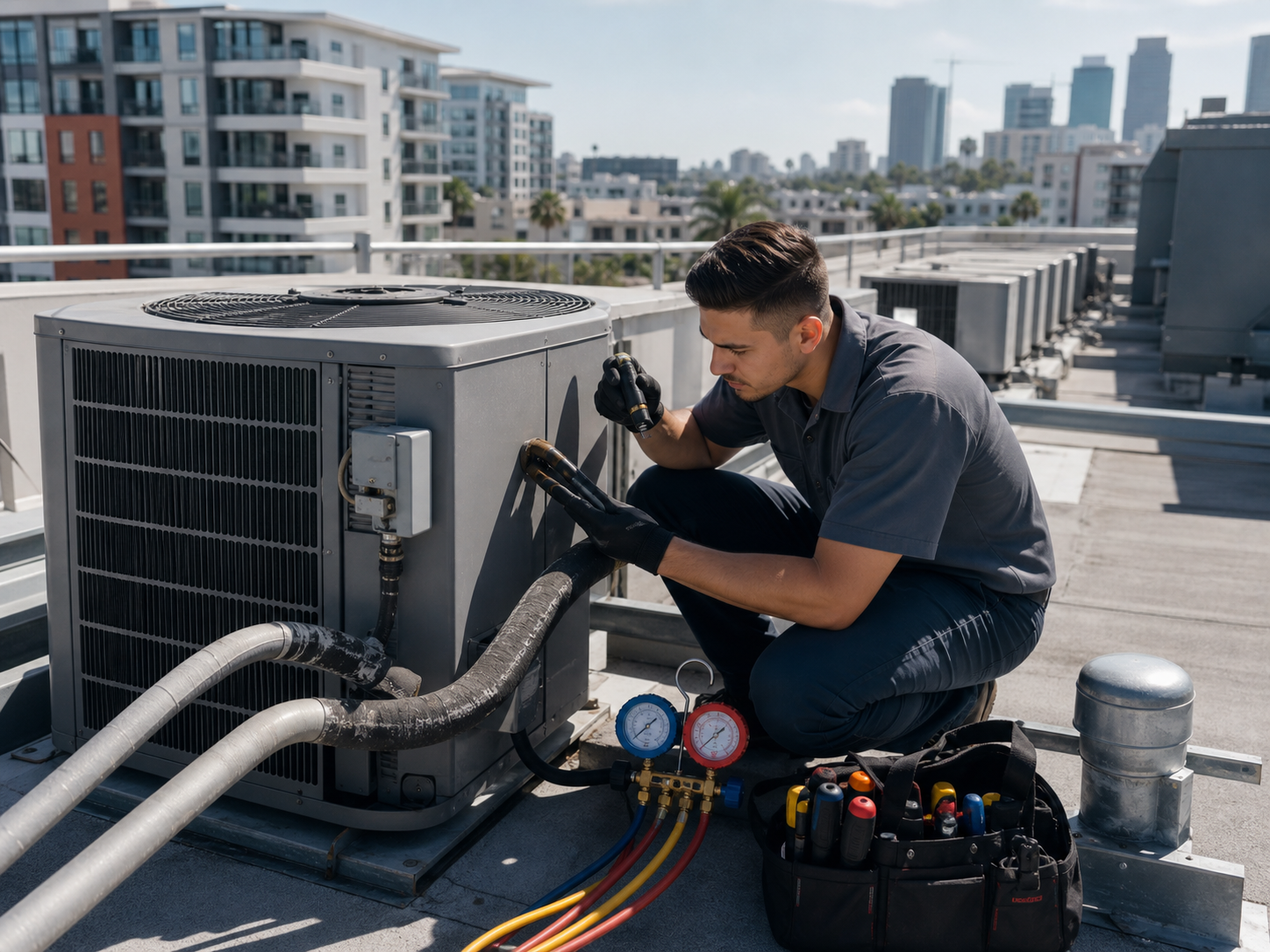
AC Repair in Los Feliz should start with a clear symptom, a clean access plan, and a realistic view of what can expand the scope. The visible problem may be Compressor short cycling, Frozen coils, Clogged condensate lines, but the visit can change when the building adds noise-sensitive neighbors, steep streets, or limited roof access. In a hillside houses, the technician may need to reach the equipment, panel, drain, shutoff, cleanout, roof hatch, balcony, garage, or building manager before the real diagnostic work starts.
The most useful preparation is simple: book the dispatch window, add photos, list the exact symptom, note whether other units are affected, and confirm who controls the building areas. If the call involves no cooling, active leaking, burning smell, repeated breaker trips, water heater failure, or a backup that affects more than one fixture, treat it as urgent. If the symptom is stable, use the same process to plan a repair, replacement, or inspection-ready estimate without forcing an emergency premium.
Best first move
Book through the external form, then prepare these items: Note the thermostat reading and room temperature; Check whether air is moving at all registers; Photograph water near the air handler; Secure roof or garage access; Ask the HOA about service-hour rules. For Los Feliz, add access notes for steep streets; limited roof access; older crawl spaces; noise-sensitive neighbors.
Why AC repair is different in Los Feliz
Los Feliz sits in the East and Northeast service cluster and is best understood as a older homes and condo pockets. Homes around hillside residences, older apartments, Franklin corridor can combine older single-family homes, condos, courtyard apartments, hillside houses on the same few blocks. That mix matters because the same AC repair call can require different equipment, ladder access, shutoff windows, service-hour approvals, or cleanup protection depending on the building. A newer high-rise may have strict elevator and engineer rules. An older apartment may have limited panel labeling and shared drain stacks. A converted building may hide old pipes, old wiring, or nonstandard mechanical routing behind newer finishes.
The local utility context is also part of the plan: LADWP electric and water service, with SoCalGas context where gas appliances remain. The permit and inspection context is LADBS plan check and inspection. For ac repair, the permit question is: Usually no permit for basic diagnostics; permits may enter the picture when equipment, electrical, or refrigerant work expands. That does not mean every small diagnostic requires a major permit process. It means the repair should be separated from permanent replacement, new circuit work, gas or venting changes, sewer or pipe work, equipment relocation, or any scope that changes the building system.
Los Feliz data-point snapshot
Reference points: hillside residences; older apartments; Franklin corridor. Building mix: older single-family homes; condos; courtyard apartments; hillside houses. Access profile: steep streets; limited roof access; older crawl spaces; noise-sensitive neighbors. Risk profile: aging sewer laterals; panel limitations; ductwork imbalance; water-heater venting; tree-root intrusion. Seasonal operating context: hillside heat; smoke filtration needs; rain runoff around foundations. Nearby comparison markets for routing and internal links: Silver Lake, East Hollywood, Hollywood, Echo Park, Larchmont.
A useful Los Feliz dispatch note should sound different from a nearby-market note. For this page, the important local signals are hillside residences, older single-family homes, steep streets, aging sewer laterals, and hillside heat. Those details change how ac repair is quoted, staged, diagnosed, and explained. They also help the visit avoid the common failure pattern where the technician arrives with the right trade skill but the wrong access assumptions.
Address-level scenario for AC repair in Los Feliz
A realistic Los Feliz call might involve a hillside houses near hillside residences, with noise-sensitive neighbors controlling when the technician can reach the equipment or shutoff. For AC repair, that changes the first visit because is the failure a small cooling part, an airflow problem, a condensate issue, or a symptom of equipment that is being pushed beyond the building conditions? The answer determines whether the appointment is a narrow diagnostic, a make-safe visit, or a planned replacement path.
The common bad assumption is that every no-cooling call is solved at the thermostat or capacitor. In Los Feliz, that mistake is more expensive when ductwork imbalance or tree-root intrusion is present, because the symptom can spread into access, safety, water damage, comfort, or inspection timing. The stronger approach is to collect evidence before selling scope: supply-air temperature, return-air restriction, condensate condition, disconnect and breaker status, roof or balcony condenser condition.
Common failure modes and hidden risks
For this service, the common technical risks include Compressor short cycling, Frozen coils, Clogged condensate lines, Bad rooftop disconnects, Undersized return air in older units. In Los Feliz, local risks such as aging sewer laterals, panel limitations, ductwork imbalance, water-heater venting, tree-root intrusion can make those symptoms more expensive or more urgent. A cooling failure may be caused by a small part, but roof access, condenser condition, airflow restrictions, or electrical disconnect problems can change the visit. A panel or EV charger issue may look like one circuit, but load calculations, meter-room access, or old grounding can decide whether the work is safe. A plumbing leak may look contained, but water moves through walls, ceilings, cabinets, and electrical areas faster than most owners expect.
Do not keep resetting breakers, running water into a backed-up drain, using a leaking water heater, or operating HVAC equipment that smells hot or is spilling water. Those actions can turn a repair into building damage. The safer path is to isolate what you can, document the symptom, protect nearby areas, and book a visit with complete access notes.