Local building systems in Hollywood
Hollywood is best treated as a mixed high-density district service market, not a generic Los Angeles label. The homes and units around Hollywood Boulevard apartments, older hotels converted to housing, newer mixed-use towers can include older apartments, condo towers, mixed-use buildings, bungalow courts. That variety matters because an HVAC, electrical, or plumbing call may involve a roof hatch, older panel, shared drain stack, water heater closet, crawl space, garage conduit path, or HOA rule before the core repair can begin.
The local utility and permit context also matters. LADWP electric and water service, with SoCalGas context where gas appliances remain. For permitting and inspection, the relevant context is LADBS plan check and inspection. A quick repair may stay straightforward, but equipment replacement, new circuits, repiping, sewer repair, water-heater replacement, heat pump installation, EV charger work, or remodel-related changes can trigger documentation and inspection steps. The safest way to plan is to identify the likely trade scope before opening walls, replacing equipment, or promising a same-day completion.
Access notes for Hollywood
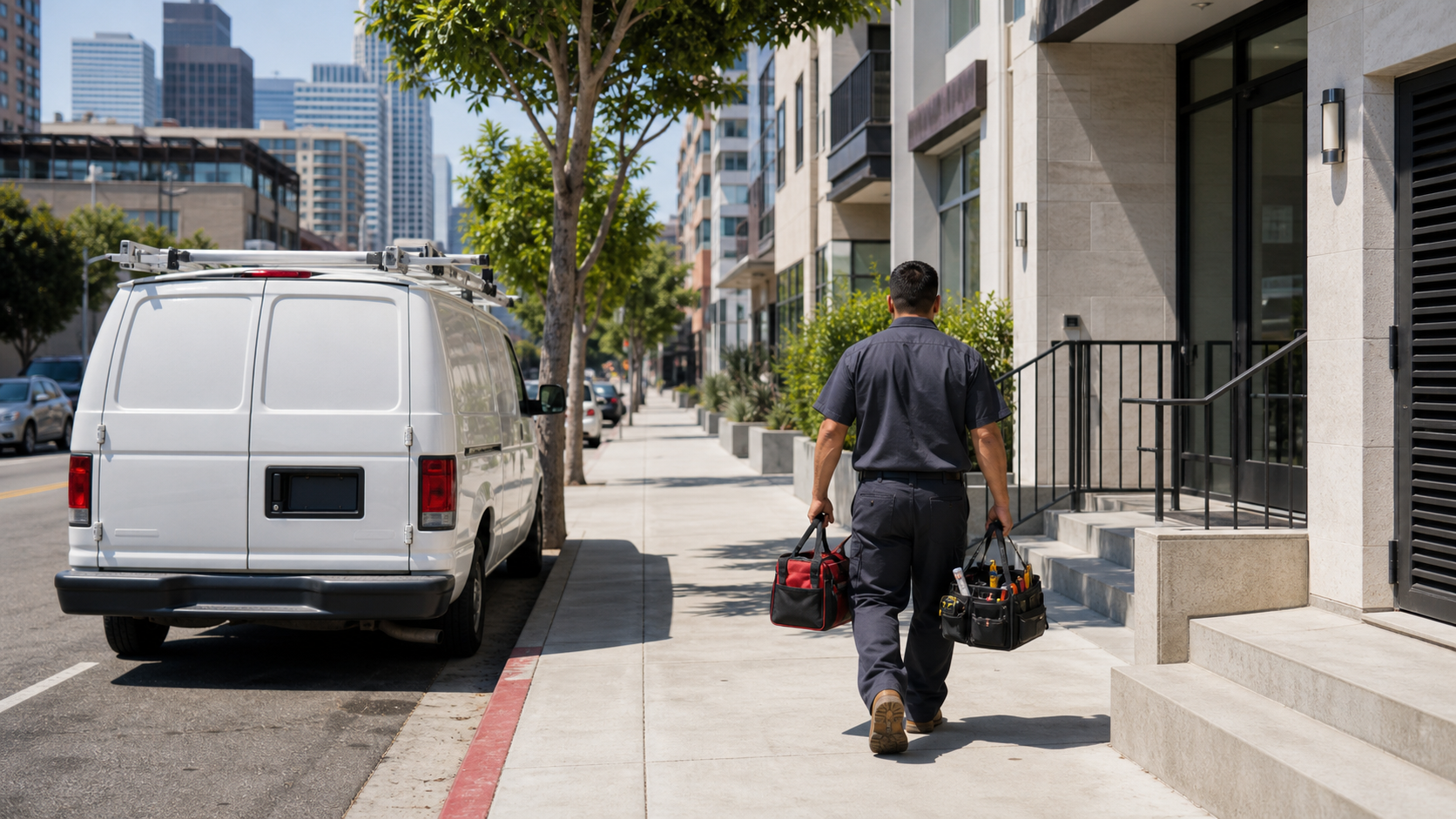
Prepare for event traffic, loading-zone timing, rooftop units, building security. If a building manager, front desk, HOA, or neighbor below must be involved, solve that before the dispatch window so the visit does not turn into an access-only trip.
Common local failure modes
In Hollywood, the most common service friction includes old risers, undersized panels, poor airflow in subdivided units, drain backups, locked mechanical rooms. HVAC calls often become more than a thermostat issue when equipment is on a roof, airflow is restricted by old duct design, condensate cannot drain properly, or the electrical panel is too tight for a modern heat pump. Electrical calls often expand when old panels, ungrounded circuits, overloaded appliance loads, or shared meter rooms make a simple device repair less simple. Plumbing calls can become urgent when a water heater leaks above another unit, a stack backs up, a shutoff fails, or a sewer line is affected by roots or old pipe material.
Seasonal conditions add another layer: heat in upper floors, tourism traffic delays, air quality episodes. During heat events, no-cooling calls can involve vulnerable occupants and overloaded temporary cooling. During poor air quality or wildfire smoke periods, filtration, duct leakage, and fresh-air paths matter. During rain or heavy usage periods, slow drains and sewer odors can move from annoyance to backup risk.